Shipping an AI co-pilot scientists could trust

CHALLENGE
BenchSci’s reputation was built on evidence scientists could check for themselves. GenAI put that at risk twice. First when AI summaries could hide where a claim came from. Then when a multi-agent architecture made the whole search process invisible.
WHAT I DID
Self-initiated the research that set the company’s AI direction. Established trust through visibility as the design principle. Shipped both of its expressions: citation-backed summaries in 2023, and progressive disclosure of agent reasoning in 2025.
OUTCOME
The direction contributed to a US$70 million Series D and seven-figure enterprise contracts with three top-20 pharma companies. Other teams adopted the citation pattern. The principle outlasted both features and still shapes BenchSci’s AI products today.
ROLE
Principal Product Designer. Primary design owner across both chapters.
TIMELINE
2023 to 2025. Two moments, one principle.
TEAM
Started solo, then a tiger team of five, with no PM assigned. This evolved to working alongside a PM, five engineers, a project manager and three scientists.
DETAILED PROJECT BREAKDOWN
One principle, two moments
This is one story, not two projects.
Scientists use BenchSci to understand disease biology and validate experiments before costly drug-program decisions. They are trained to interrogate methodology. They do not accept a conclusion because it sounds authoritative.
In 2023 I asked how you make generative AI useful to those people without asking them for blind trust. The answer was a principle, trust through visibility, and its first expression was inline citations.
In 2025 the same product moved to a multi-agent architecture and the principle stopped being enough. Citations still told scientists where an answer came from. They said nothing about what the system was doing to get there.
I owned the principle at both moments. The interesting part is not either feature. It is what had to change to keep the principle true once the problem got harder.
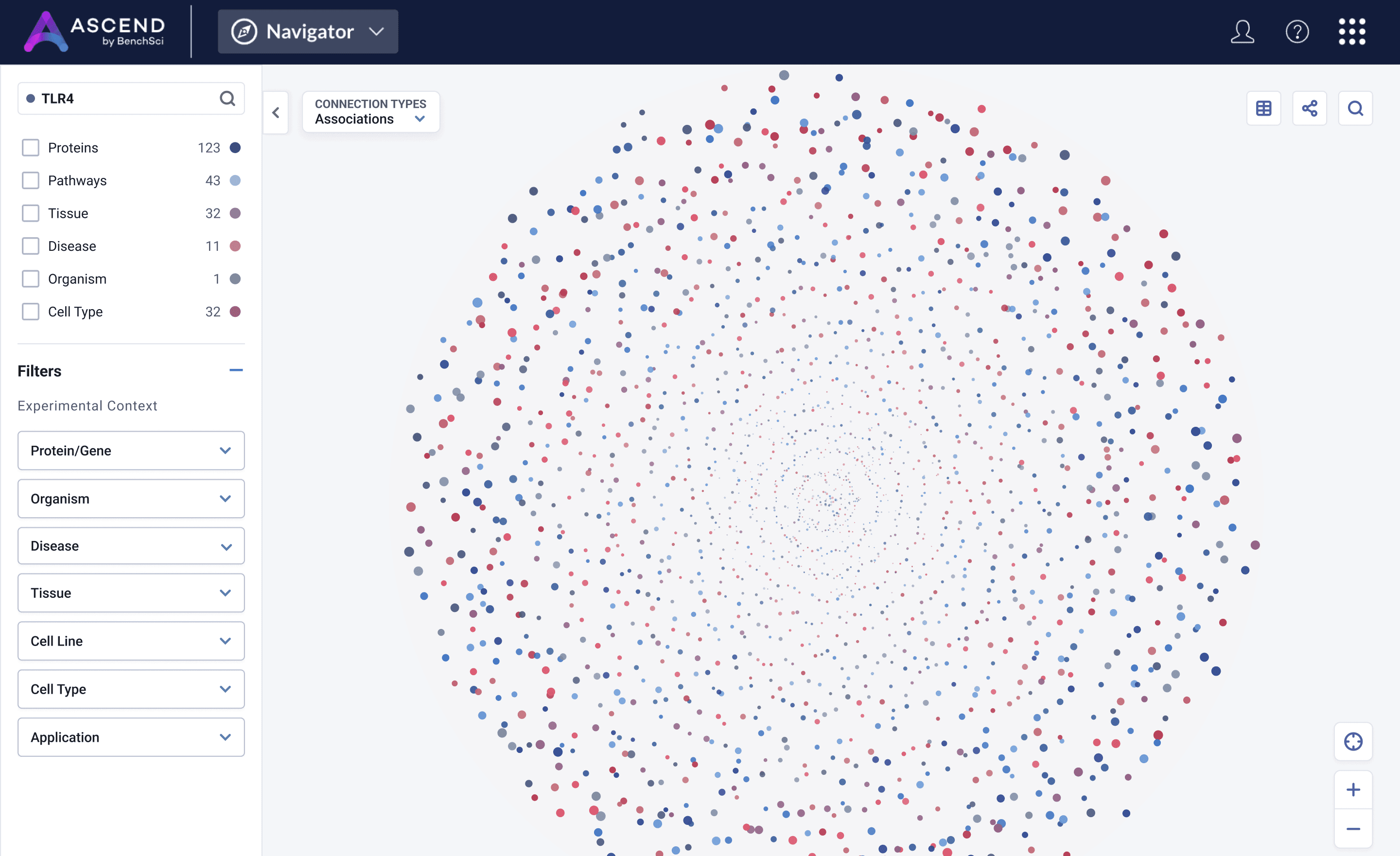
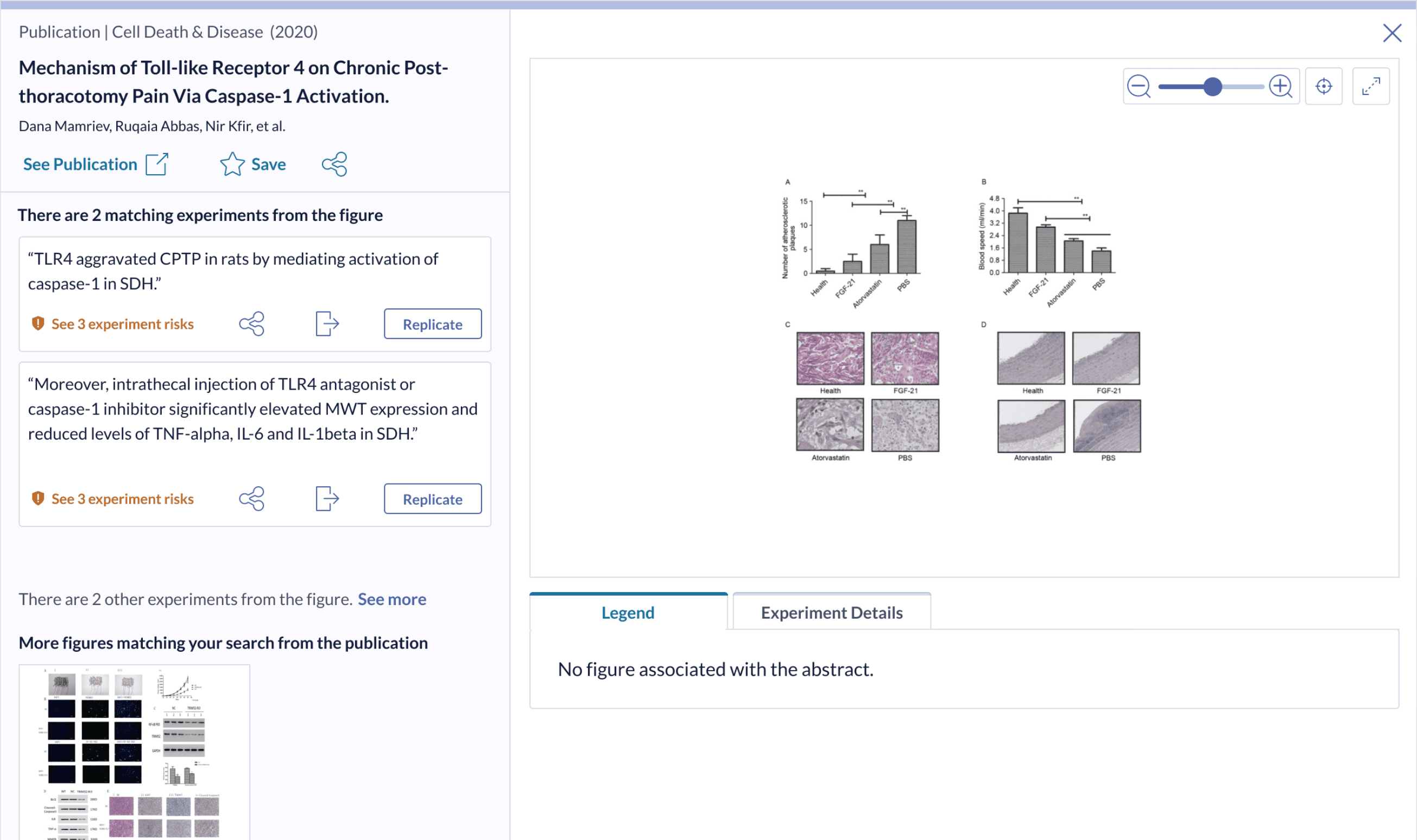
The company had a roadmap and no point of view on GenAI
Rather than keep arguing about it, I made the case in about a week to go and ask scientists.
In early 2023 the internal conversation kept stalling. There was an existing roadmap and active enterprise customers, so any new direction meant taking resources off committed work. Leadership was rightly worried that AI would weaken the exact thing the company was known for, through hallucinations, weak citations and unreliable output.
And nobody was grounding the debate in conversations with scientists.
The opportunity was real: accelerate insight-finding across thousands of papers. So was the risk: black-box output. As a principal designer I saw horizon scanning as part of my job, so I pitched discovery research as the way to settle it.

How do you change direction for a company already in motion, with pharma customer logos.
Scientists wanted speed and verification, not a trade-off between them
The finding that shaped everything after it: verification had to be lightweight and local. Not a separate step. Not a different screen. Right there, next to the claim.
verification had to be lightweight and local.
I ran the discovery myself and tested two concepts against each other. One kept the existing interface and added a chatbot on top. The other was conversational and AI-first.
Three findings mattered. Scientists loved AI-generated summaries and still wanted direct access to the underlying source. A chatbot layered onto the existing interface did not feel meaningfully faster or easier. And scientists were drawn to visuals and pathways, not only text.
Underneath all three sat one tension, speed versus confidence, and one core need: traceability.

early concept tests, chatbot-on-top vs AI-first.
The principle: trust through visibility
The interface’s job was to lower the cost of verification, not to argue for the AI’s credibility. That guided this feature and every AI decision that followed.
Decision: frame AI as an assistive layer, not an authority
I turned an engineering constraint into the reason the summary felt additive rather than authoritative.

Decision: anchor every claim to an inline citation
Hover to check, click to go deeper. And copying a summary copied its citations too, so trust travelled with the output.
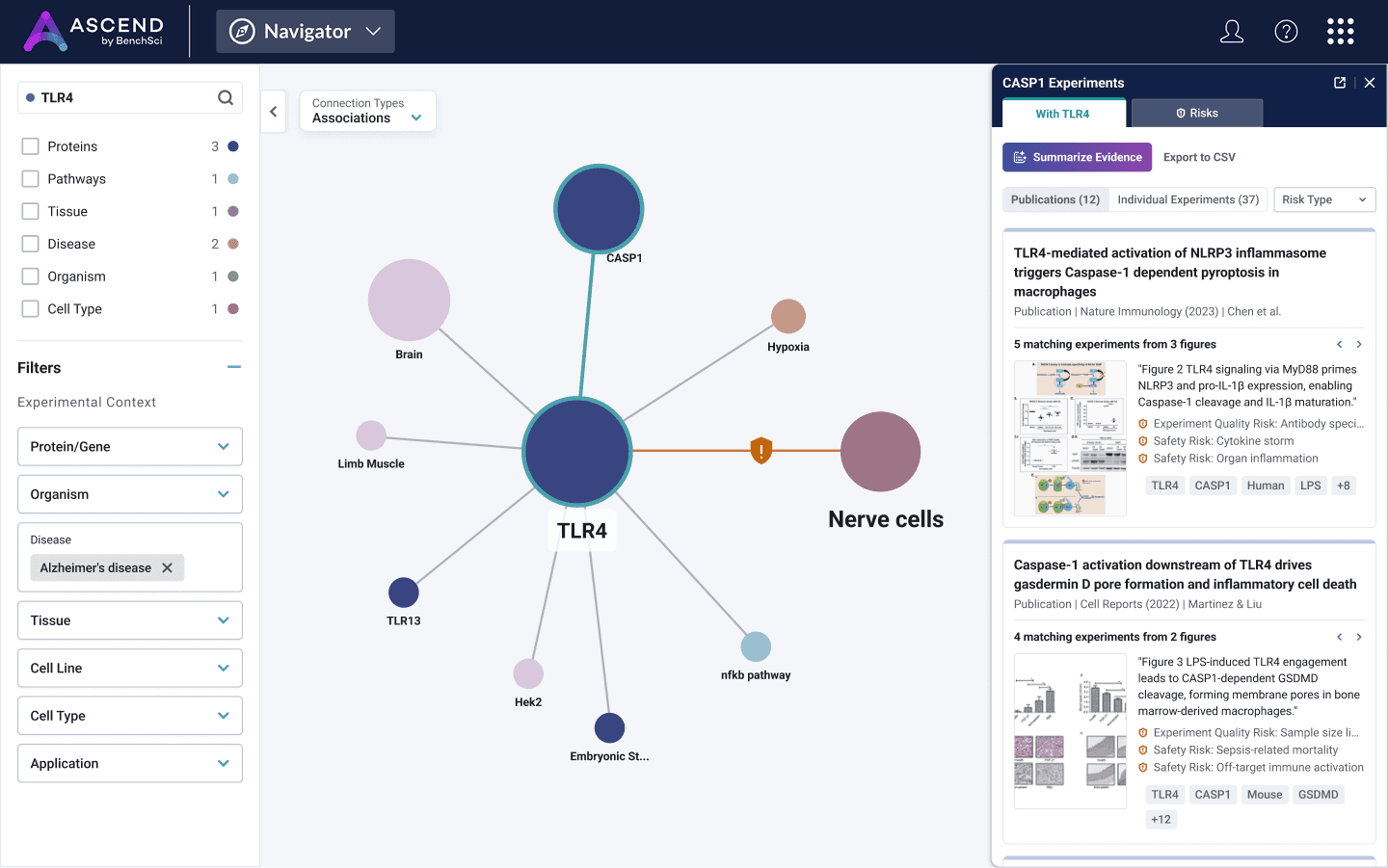
Decision: show the scope limit as a subtitle, not a warning
V1 could only analyse around 20 papers. I shipped the narrower scope and put the limit next to the claim, where it was honest without being the first thing you read.

summary panel with the scope subtitle highlighted.
Outcome: scientists moved faster without losing confidence
They were not just reading the AI output. They were checking it and carrying it forward. The direction contributed to a US$70 million Series D and seven-figure contracts with three top-20 pharma companies.
Quantitatively, we saw meaningful use of all three parts of the loop: summary generation, citation inspection, and clipboard copy for downstream reuse.
Qualitatively, post-release feedback was strongly positive and the theme was consistent. The main request was fuller literature coverage, which is a request for more of the thing rather than a complaint about it.
The feature expanded to summarise risks and gained dedicated support including a PM. It became a visible proof point in sales, and it demonstrated something the company needed to know: GenAI could be introduced into a high-stakes scientific workflow without breaking trust.

outcomes, Disease Biology GenAI platform positioning.
A multi-agent architecture made the process invisible
Trust stopped meaning only can I verify this claim? and started also meaning can I understand what the system is doing while it works?
By 2025 BenchSci had built ASCEND, a co-scientist that answers biological questions across scientific literature, clinical trials and proprietary data. The architecture moved from a deterministic flow to a multi-agent system, which broke the assumptions the original design relied on.
Scientists faced two problems at once. They could not tell whether the system was still working. And they could not tell what had been searched, or why the answer looked the way it did.
For people trained to interrogate methodology, an invisible method is a reason not to trust the result.
Showing every agent at once made it worse
My first instinct was more transparency. It was wrong. More detail did not produce more trust.
I designed and tested a version that showed all agents at once. Because different agents returned at different times, the interface felt disorienting rather than reassuring. The complexity of the architecture leaked straight into the interface.
Too much visibility created noise. Too little created doubt. Progress was often non-linear, and raw system updates were hard to follow.

the rejected all-agents-visible version, raw parallel updates.
Decision: show the latest meaningful step, expand for the rest
Meaningful progress by default, deeper process on demand. Lower cognitive load, and the auditability scientists actually needed. I documented it as reusable primitives rather than screens, because the architecture was still changing underneath us.

default collapsed state.

expanded reasoning chain.
The constraint I could not design around
I knew the better solution. Engineering bandwidth did not allow it, so we shipped the simpler pattern and scoped the rest as a fast-follow.

raw event stream vs grouped progress beats, the intended next iteration.
Outcome: scientists stopped interpreting delays as failure
Scientists stopped interpreting delays as failure. The waiting had not changed. What changed was that the wait now meant something.
scientists stopped interpreting delays as failure.
This is early qualitative evidence only. There were no robust post-launch metrics before I left BenchSci, and I would not claim more than the evidence supports.
Scientists better understood what the system was doing. Progress updates made the assistant feel less opaque. Feedback from customers and internal scientists was positive, and QA saw less confusion during long-running responses.
What I would improve
I would have pushed harder for the batched progress beats in chapter 2 instead of accepting the streaming compromise. It shipped as a fast-follow on someone else’s roadmap rather than mine, and a pattern this foundational deserved the extra argument.
And I would have instrumented trust earlier. In chapter 1 we had behavioural signals, citation inspection and copy rates, that told us the principle was working. In chapter 2 we shipped on qualitative confidence alone. I knew what to measure. I did not fight for the time to build it in before launch.
The principle outlived the project
Two expressions of the same idea, two years apart.
Expression 1, evidence traceability.
Can I check where this claim came from?
Expression 2, process legibility.
Can I understand what the system did to get here?
Today.
The pattern continued shaping BenchSci's AI direction after both features, into EMET, the company's current expert-agent platform.
Neither feature is the point. The point is that a principle set in a week of discovery research in 2023 was still doing structural work in the product years later, because it was defined at the right level of abstraction and documented as primitives rather than screens.

three-panel evolution, AI summaries to agent reasoning to EMET.