About
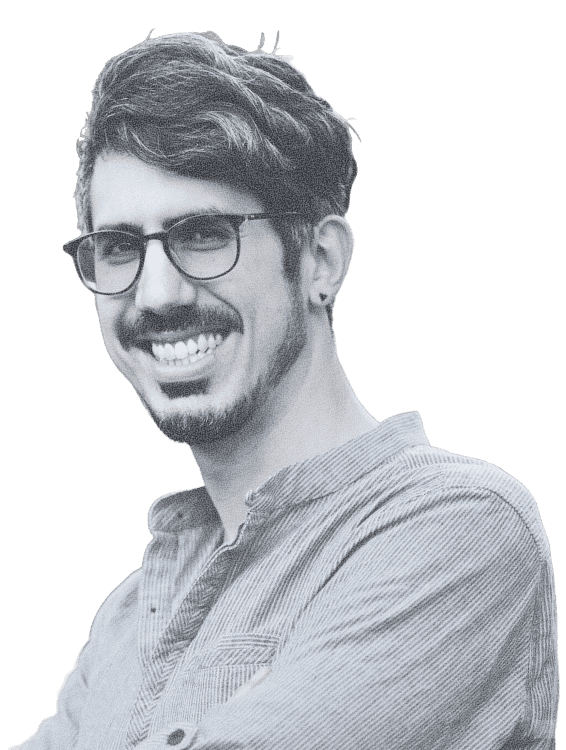
I’m Matan. I’m a product designer who takes complex systems and makes them understandable through design and storytelling.
Growing up, I struggled to concentrate in school. The way things were taught felt overly complicated. Over time I developed a way for finding the core of something: drawing and diagramming it out.



I was also equally drawn to art and science. I spent years feeling like those two sides of me were in competition, until I found a path that combined them… I was on the track for medical school when I discovered and pursued an MSc in Biomedical Communications at the University of Toronto instead. It turned out to be exactly what I had been looking for: a place where science and storytelling weren't in conflict but deeply integrated.
That helped shape everything since. I've spent my career gravitating toward complex, interesting subject matter and figuring out how visuals can make it understandable for everyone else.
Work history
The urge to explain things clearly showed up long before I worked in tech. I coached swimming, led science programs at an aquarium, and coordinated a tutoring program for children across a network of schools. These roles all honed my skills of meeting people where they are and figuring out how to explain something clearly.
My first step into tech was as a Client Service Analyst at Eigen Development in Vancouver, doing quality assurance, regression testing, and documentation on payment processing software. It wasn’t glamorous, but it was the first time I saw how decisions made by tech and sales teams ripple through to the people actually using the product, and how much clear communication matters when things break (and people are panicking!).
While finishing my MSc I took on two roles that bridged both worlds: as a Teaching Assistant at the University of Toronto I ran tutorials for a health and science communications design course, and as a Biomedical Communicator at the Toronto Video Atlas of Surgery I helped build a web and VR app that let surgeons and patients explore 3D anatomical models before going into the operating room.
From there I joined as a founding designer at BenchSci, one of the first ten people at a life sciences startup that would eventually grow past 300. The early years were scrappy. No design function, no processes, just a genuinely hard scientific problem and the work of figuring out how to make it approachable for researchers. I built the design function from scratch, launched the company’s first product, and helped unlock the first enterprise deal by uncovering a gap nobody had clearly articulated yet. Over time the platform grew to serve over 50,000 scientists across 4,500 research centers, including 16 of the top 20 pharmaceutical companies. Later, as AI became central to the company’s direction, I helped define what that actually meant in practice for our users: designing trust signals and interaction patterns for a multi-agent conversational AI, making something genuinely non-deterministic feel transparent and controllable. That vision became BenchSci’s flagship product in 2024. Along the way I grew the design team to 14 people, filed two patents, and presented at conferences on user-centered practice in complex domains.
After nearly nine years at BenchSci, I joined BioRender to lead the design team, shifting focus toward building organizational capability: defining research standards, building tooling so teams could analyze user insights independently, and laying the groundwork for an AI-first design system that aligned design and engineering on how to build together.
Outside of those roles I’ve stayed close to the wider design community, mentoring designers on craft and career through ADPList, and spending several years with the Pistoia Alliance’s UX in Life Sciences group, presenting at conferences and working through what it really means to design for scientists.
I’m now looking for my next role at that same intersection: complex, meaningful subject matter, and the challenge of making it simple.