Designing a VR Teaching Tool for Surgical Anatomy
CHALLENGE
Toronto Video Atlas of Surgery
WHAT I DID
Surgeons
OUTCOME
Healthcare
ROLE
TIMELINE
TEAM
DETAILED PROJECT BREAKDOWN
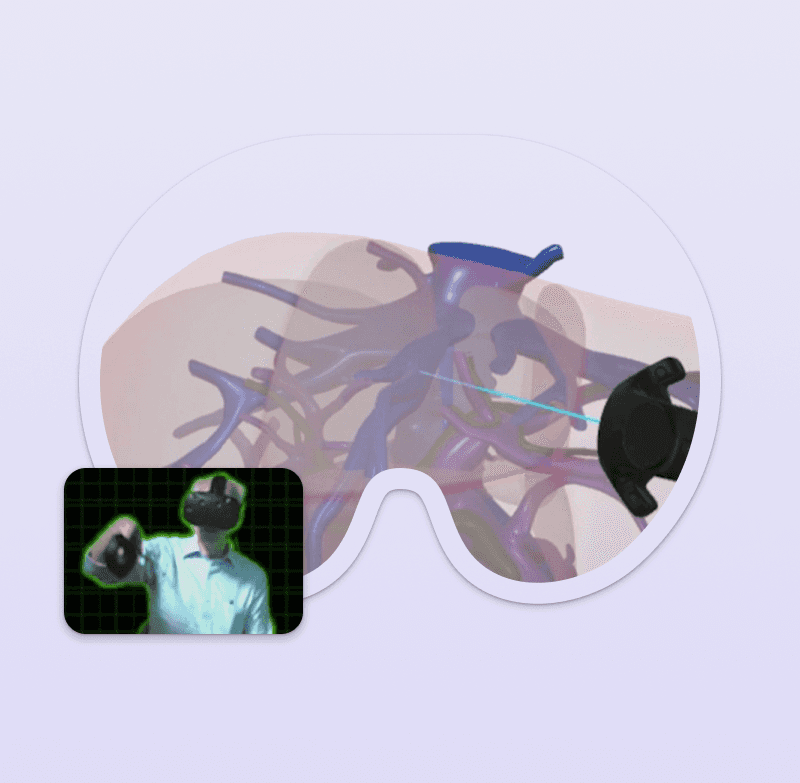
I created a VR teaching tool that helped surgical educators communicate complex spatial anatomy more clearly
As the sole designer and developer, I built and tested an immersive experience that allowed instructors to manipulate 3D anatomical models in real time. The tool successfully debuted at a surgical seminar and showed strong potential for future use in medical education.

Teaching anatomy with flat images limits understanding in surgical training
Surgical anatomy involves intricate spatial relationships that are hard to convey using 2D illustrations or verbal descriptions. Students struggled, and instructors lacked a way to make structures truly tangible during teaching sessions.

I led UX design, interaction modeling, and Unity development end to end
During my internship at TVASurg, I collaborated closely with educators to understand how they teach. I translated these insights into intuitive VR controls and interaction flows using HTC Vive and Unity 3D.
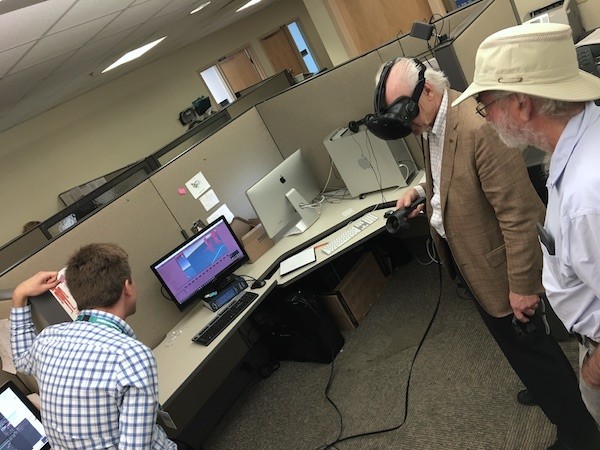
I observed real surgical seminars and tested prototypes with experienced instructors
To ensure effectiveness, I studied how anatomy was taught in the real world and involved a surgeon in iterative testing. This helped refine both the UI and the teaching flow of the VR experience.
I focused on usability, realism, and seamless integration with surgical workflows
The app allowed instructors to rotate, isolate, and explore structures with precision. I prioritized speed, clarity, and instructional alignment to ensure it supported, rather than distracted from, learning goals.

📈 Impact: The tool was successfully deployed at a seminar and sparked interest in expanded use
The prototype made its public debut during a live surgical education session and received positive feedback. It demonstrated how immersive technology could augment traditional teaching and was considered for future expansion.
This project showed me how to lead technically ambitious work while staying grounded in real user needs. It deepened my understanding of how emerging wearable technology requires extensive user research and exploration to be truly effective. The prototype's successful use at a live surgical education session demonstrated that immersive technology could enhance traditional teaching, but only after careful research into how medical professionals actually learn and work.