Mapping the Scientist Journey

CHALLENGE
BenchSci had built three separate products, each owned by a different team, but no one owned the end-to-end scientist journey. Teams were making roadmap decisions without a shared view of the full workflow, and scientists couldn’t navigate the platform independently.
WHAT I DID
Spotted the gap, took ownership, and ran journey mapping workshops with every product team. Worked directly with cross-functional product teams to define their scope within the full journey, surfaced unmet needs, and synthesized the findings into a platform-wide R&D journey map that informed roadmap prioritization.
OUTCOME
Product teams aligned on their scope of ownership and reprioritized features around real scientist workflows. The platform became more self-service, and the journey map was adopted into onboarding for all new BenchSci employees.
ROLE
Principal Designer
TIMELINE
Mar - May 2023
TEAM
Facilitated collaboration across product, design, GTM, and internal scientists
DETAILED PROJECT BREAKDOWN
BenchSci had launched three new products, but the organization still relied on customer support to onboard scientists.
Users couldn't get to answers independently. The problem was a structural one: each team owned a different slice of the scientist's experience, with no one accountable for the journey as a whole. But scientists don't experience their work in slices. They move through a continuous research workflow (e.g. discovery, experimentation, validation). The seams between team boundaries showed up by way of complaints from users to our customer success team.

I spotted that gap and took ownership of mapping out the scientists workflows with the cross-functional teams.
I organized workshops with each team, defining the personas and steps scientists take to accomplish their work - both outside the product and within it.
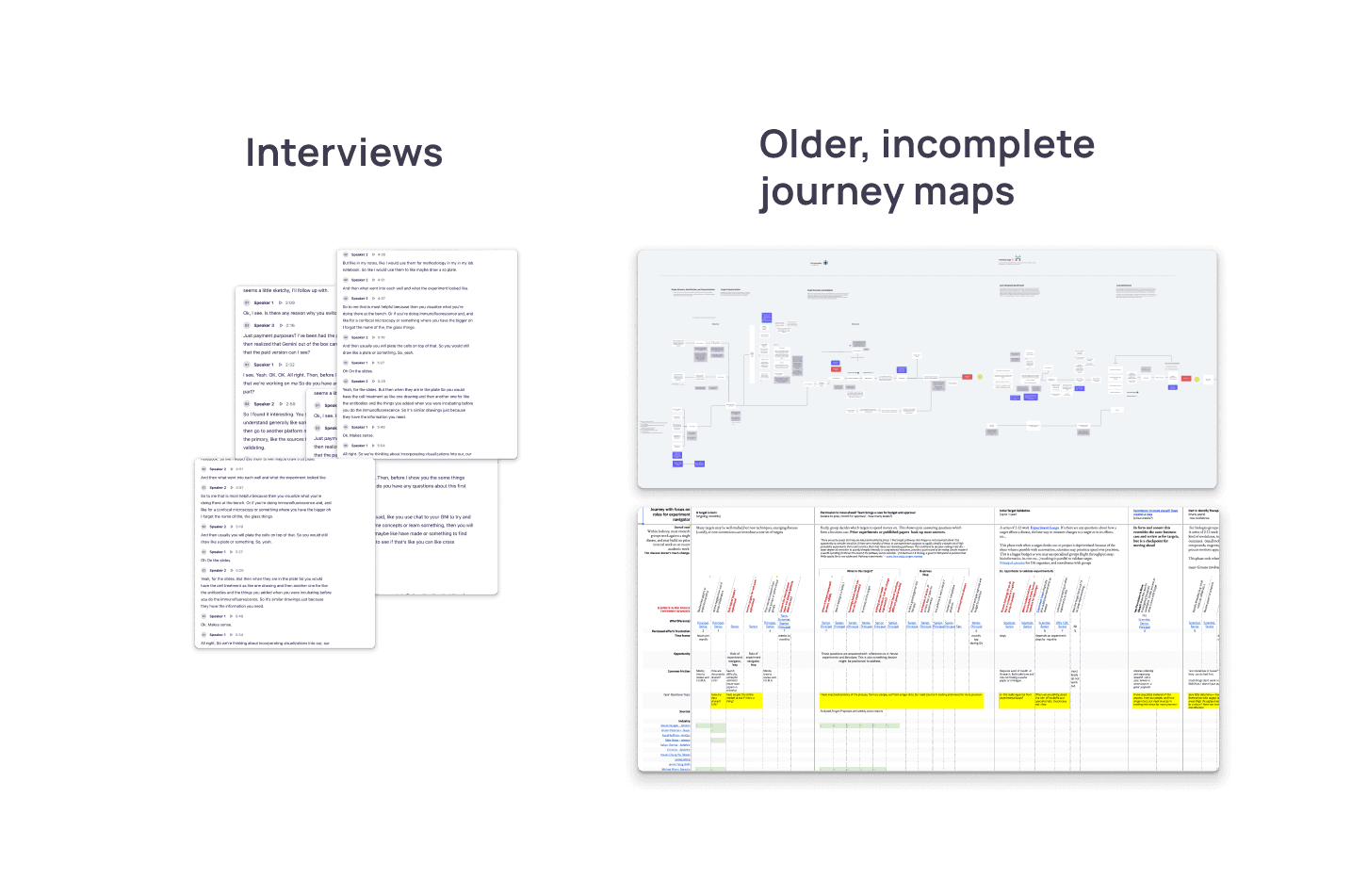
I compiled research from across the organization such as previous user interviews and journey maps, as well as spoke to subject matter experts.
The goal was to give every team a clear view of their piece of the journey and how it connected to the whole.

Two organizational challenges shaped how the work unfolded.
Many team members were unfamiliar with journey mapping and persona work. People didn't see the value, and Product Managers (PMs) felt it was extra work on top of a full roadmap. Before I could run the sessions.
I had to make the case by connecting the work to team outcomes they cared about.While the VP and Director of Product had sponsored the initiative, they weren't aligned between themselves, as well as with the PMs on its purpose. The journey mapping was surfacing internal misalignment. I'd taken that alignment for granted.
I brought together the product stakeholders to make sure they were on the same page about what we were building toward and why. This made an ally out of the product managers, who were the main collaborators of mine within the teams.
The workshops produced journey maps for every product team, clarifying each team's scope of ownership within the scientist workflow and surfacing the pain points to act on.
Those findings fed directly into roadmap decisions: features that hadn't fit neatly within any one team's remit got picked up.
The outputs of the workshops also fed into a larger map outlining the steps that scientists take in the pre-clinical research process.
It outlined where BenchSci supported the scientist's workflow, where it fell short, and where it was absent entirely. That map became the shared reference the organization pointed to when setting priorities, and was later incorporated into onboarding for all new employees.
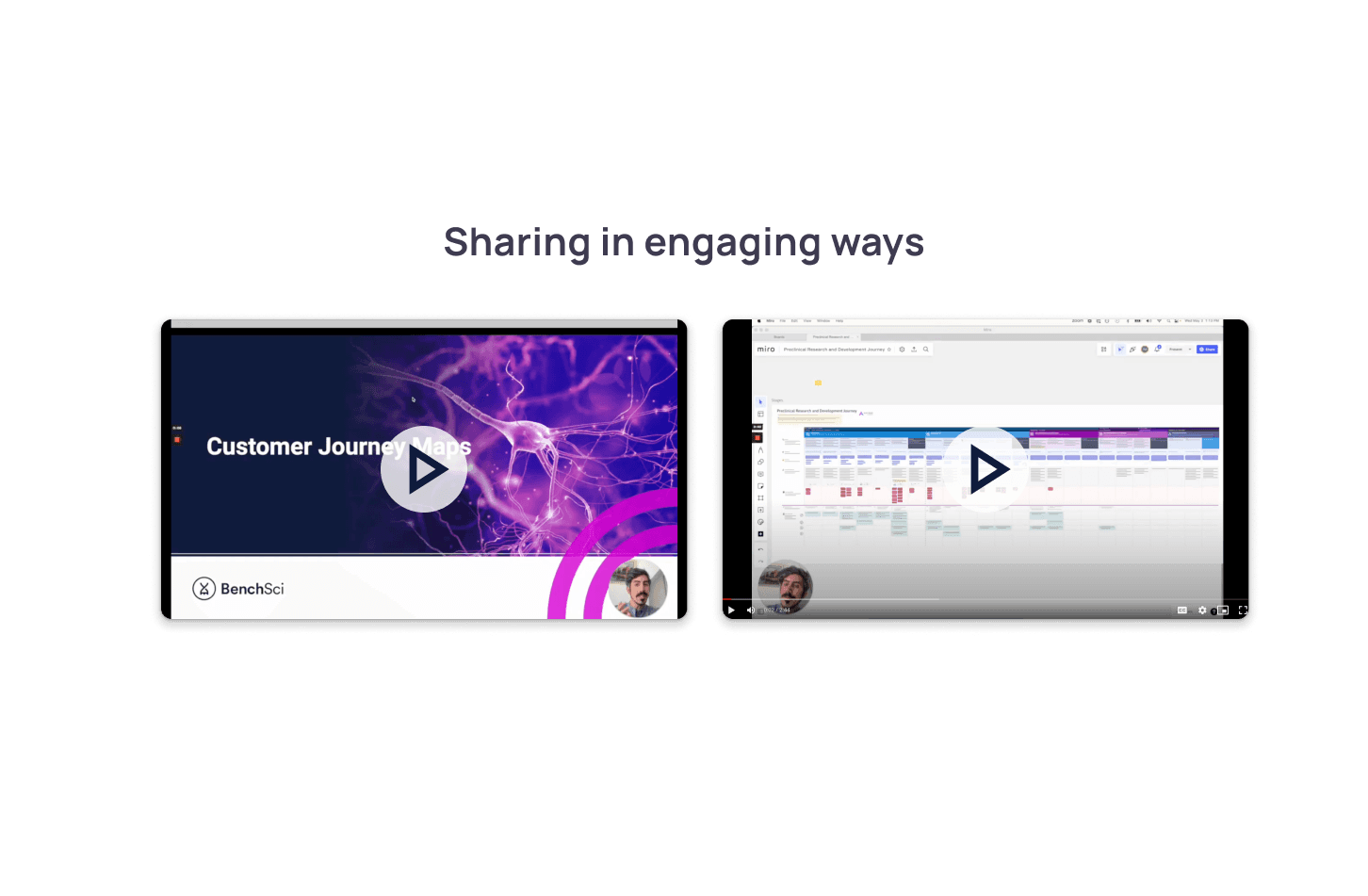
To make sure the maps didn't sit in a Miro in a board that nobody opened, I recorded video walkthroughs of the journeys, making it something people could actually engage with rather than a static artifact.

The lesson: politics get in the way if you don't align stakeholders at the outset.
When stakeholders aren't aligned before a cross-functional initiative starts, someone ends up carrying messages between levels. The team ends up lacking motivation or caring. This slowed things down in ways that were avoidable.
When I kick off initiatives nowadays, I set up joint kickoffs with leadership and the full team. I use my facilitation skills to line up the team's motivations and goals with the overall initiative's goals, creating space for people to discuss and align.